
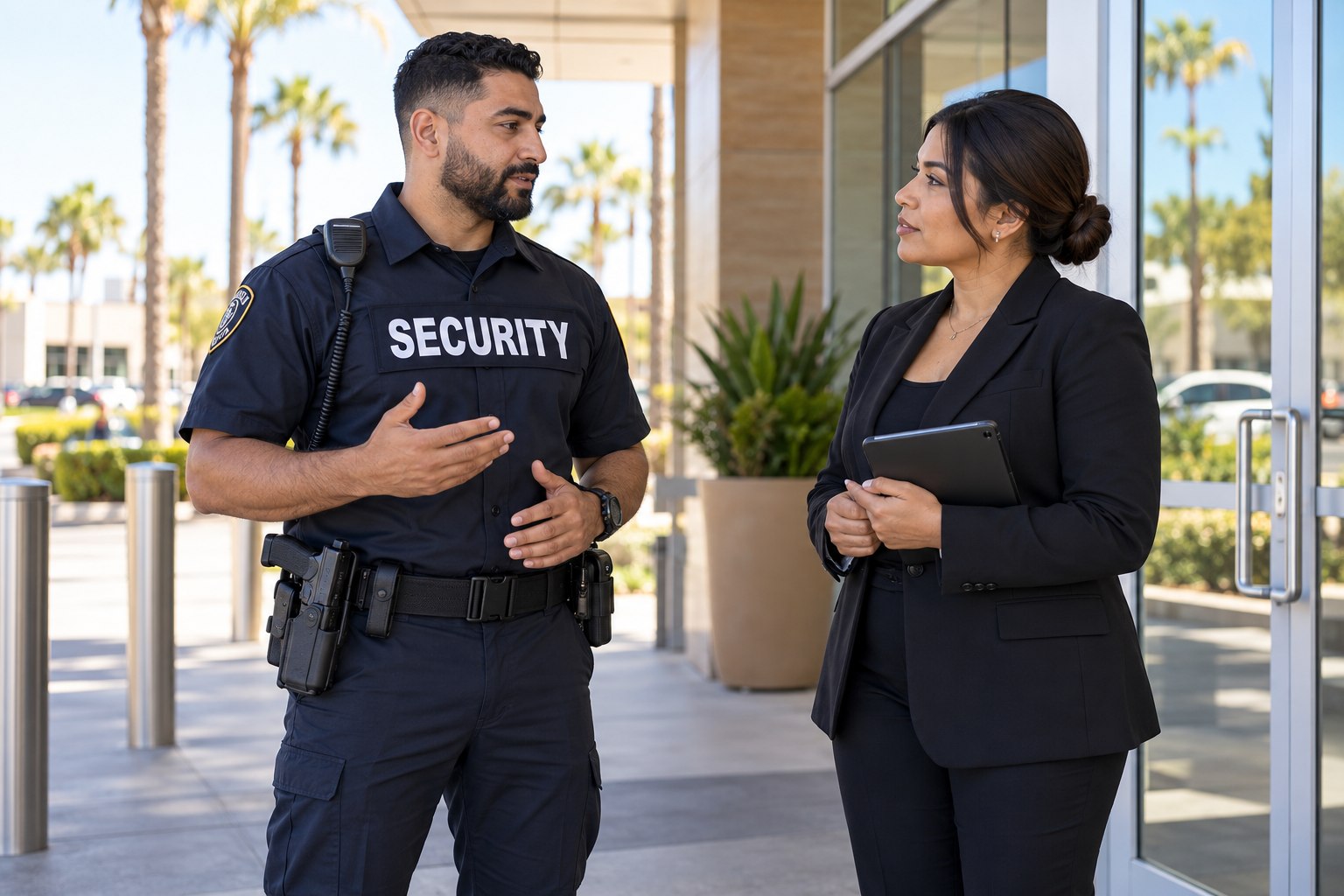
Presence and arrival measure different things
Imagine a business where a guard is present during operating hours. If an employee reports a threat, that guard is already at the location. Police called to the same incident may need to arrive from somewhere else. This is a straightforward difference in location, not evidence that one organization is universally quicker.
Now imagine a property using a visiting patrol rather than a guard assigned there throughout the day. The private response could involve travel too. Describing both arrangements simply as security hides the difference that matters most to the comparison. Any response claim should explain the actual assignment and circumstances.
Emergency dispatch has a different purpose
The National 911 Program explains that emergencies requiring immediate police, fire, or ambulance assistance belong with 911. Its published guidance also describes how information from a caller helps identify the assistance required. Emergency response is therefore broader than whether a guard can reach one person first.
A property may need police and medical assistance even when security is present. For example, a threatening incident and a medical emergency can create separate needs at the same time. Measuring only the first arrival would omit the specialized help the situation requires. Security presence should never be used as a reason to delay an emergency call.
Armed status is not a response time guarantee
California regulates firearms permits for security work separately from security guard registration. A firearms credential concerns authorization and qualification for carrying an exposed firearm in the covered role. It does not publish or guarantee a response time for a business.
An armed guard and an unarmed guard could be standing equally close to an incident. Their equipment differs, but the physical distance does not. The question of whether an assignment should be armed deserves its own assessment. It should not be answered by assuming that a firearm makes a guard faster, grants police powers, or guarantees that a dangerous situation will end safely.
A fair comparison needs a defined starting point
Response time could mean the period between a person noticing a problem and reporting it, the period between a call and arrival, or the period until the appropriate agency takes responsibility. Combining these measures produces a claim that sounds precise but is difficult to interpret.
For a business owner comparing information, the useful question is which interval a statement describes. Claims based on a specific incident cannot establish a promise for every future event. Published agency statistics, where available, also need their category and reporting period identified. A comparison should identify the location and circumstances rather than imply that one average applies to all future incidents.
Security and police can serve the same incident
The practical benefit of a guard already present is continuity at the property. The role of police involves public law enforcement. Treating these as complementary responsibilities gives a more accurate picture than declaring a winner in every situation.
A property owner considering coverage can review the circumstances privately with Paradigm. The useful conversation concerns the property, the nature of the concern, and the limits of the assignment. The assignment should have a clear scope and realistic expectations. If immediate emergency assistance is needed, contact 911 rather than waiting for a consultation or assuming private security replaces police.