Property control matters more than a simple label
California's civil jury instructions on premises liability identify ownership, leasing, occupation and control as relevant to a property claim. They also describe factors considered in evaluating reasonable care, including the likelihood and seriousness of harm and control over the condition creating the risk. Those principles do not automatically make one party responsible for every incident.
An organizer's name on a flyer does not tell a guest who controlled a hallway, parking area or backstage space. The venue's ownership of the building does not reveal every decision made by the promoter. Looking at what each party actually controlled is more informative than assuming that one business must carry all responsibility simply because its name was most visible.
An event agreement does not explain every guest experience
Venue and organizer agreements may describe responsibilities between the businesses. Those descriptions are important, but they are not a complete public explanation of an incident. Guests may interact with venue employees, event personnel and contracted guards without knowing which employer or assignment applies to each person.
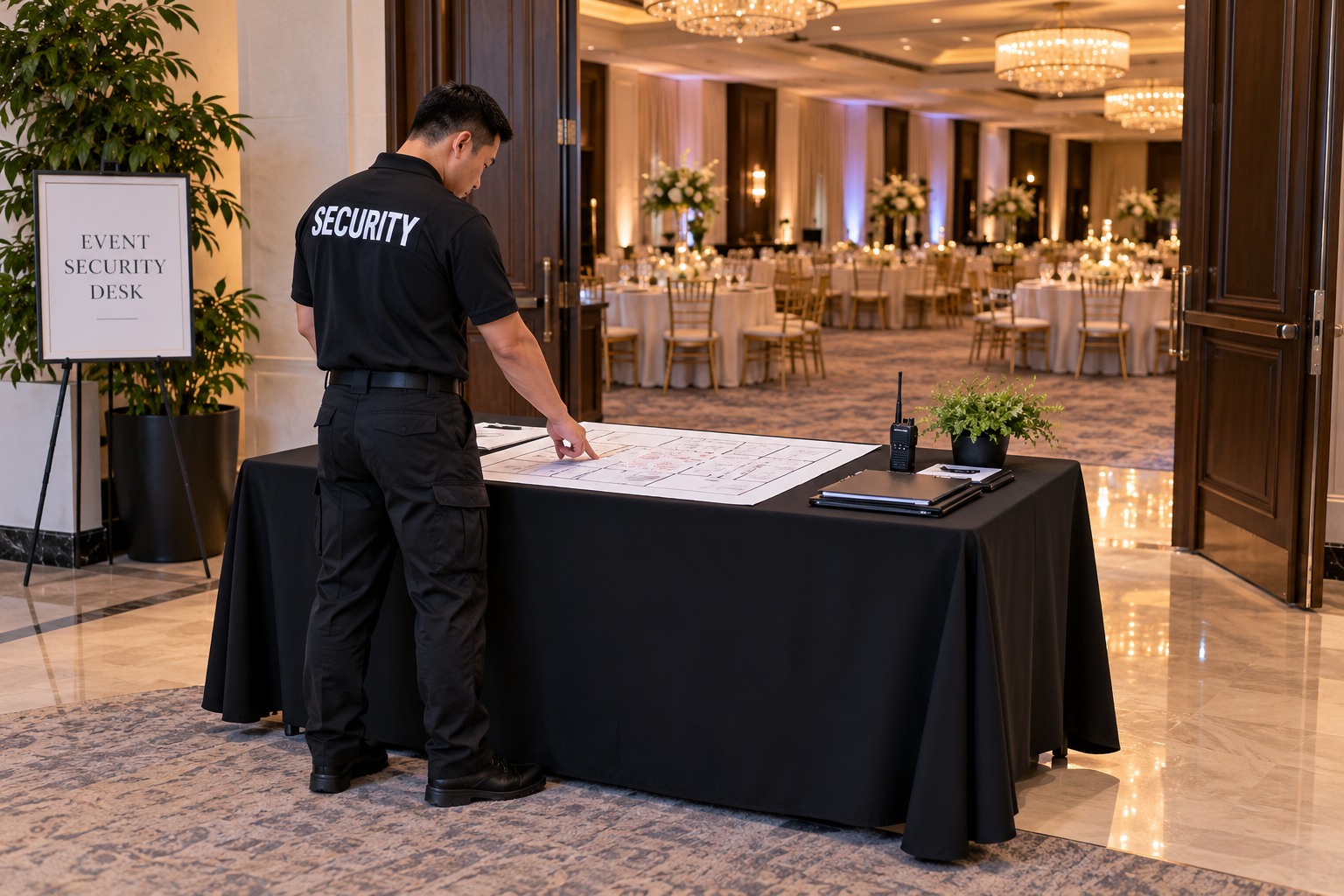
Consider an event held inside a larger commercial property. The organizer might use one room while shared areas remain under another party's control. A person moving between those spaces can encounter several different responsibilities during a single visit. This example illustrates why an incident should be evaluated in context. It does not establish liability for any particular venue, organizer or security provider.
Security presence does not erase other duties
Contracted security can support event safety, but its presence does not mean every other participant has transferred away all responsibility. The reason a guard is at an event and the scope of that guard's assignment still matter. Private security also retains legal limits; a security contract does not create police powers.
BSIS training materials distinguish security personnel from peace officers and review the limits of private arrest authority. Guests should not have to assume that a uniform answers every question about authority. Organizers likewise should not expect security personnel to make decisions outside the agreed professional role. Clear explanations help avoid misunderstandings about who handles a concern and why.
The incident outcome is not a shortcut to liability
An injury or disturbance is serious, but its occurrence alone does not determine who was negligent. A meaningful assessment considers what happened, the duties involved and whether a party's conduct contributed to the harm. Equally, the fact that security was present does not prove that an event's arrangements were adequate. Both conclusions would skip the necessary factual analysis.
For organizations arranging an event, the useful starting point is an honest assessment of the event environment and the requested security responsibilities. Paradigm can be approached about that scope so that the security assignment reflects the event rather than assumptions about a different venue or audience. Guests, venue managers and organizers benefit from the same clarity: event safety involves several roles, and none should be described through assumptions that conceal accountability.